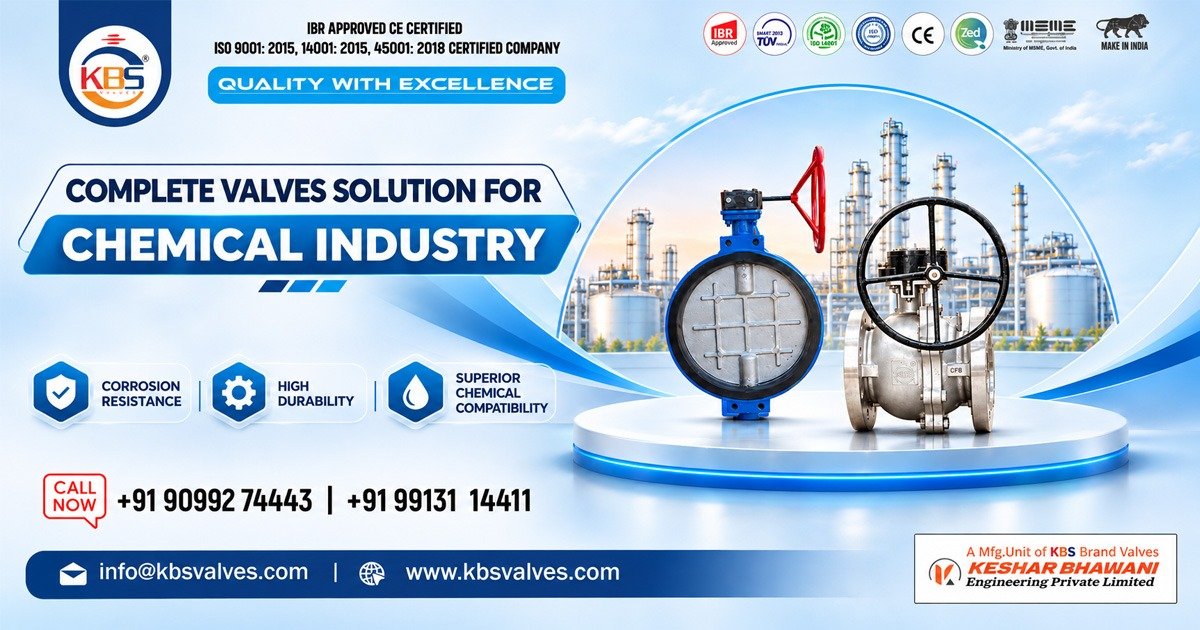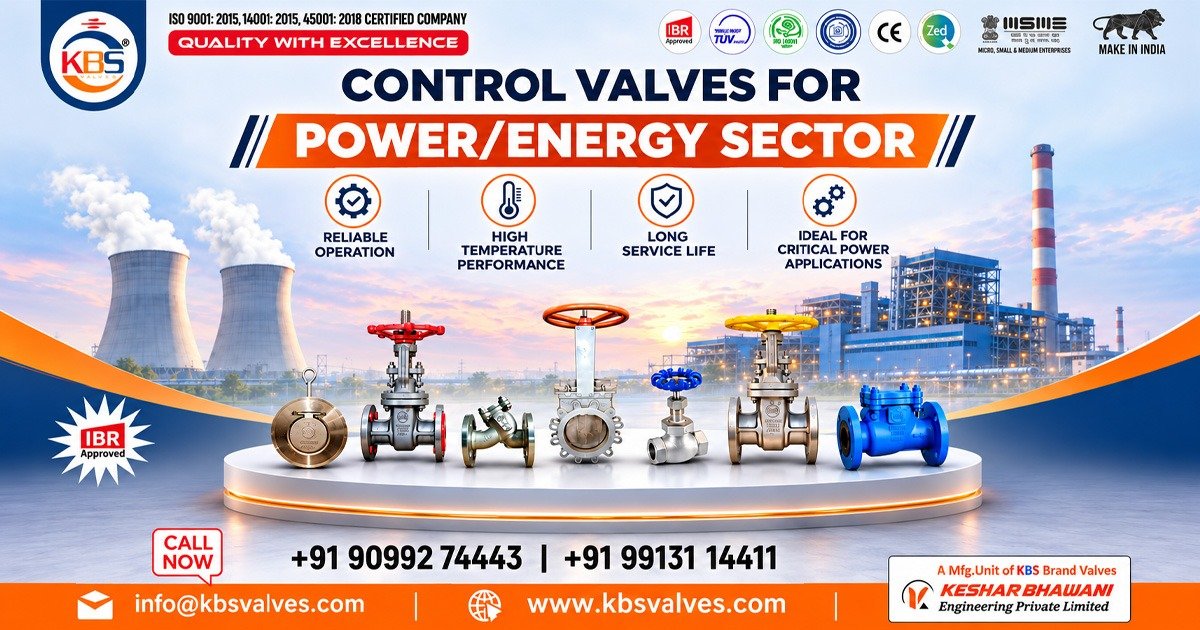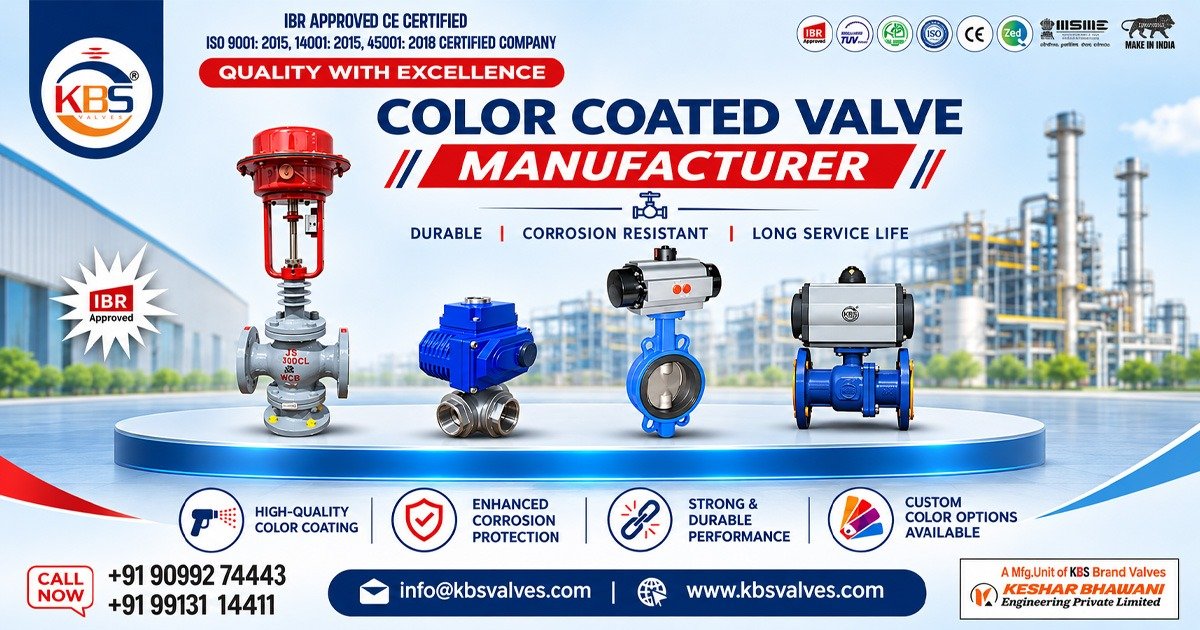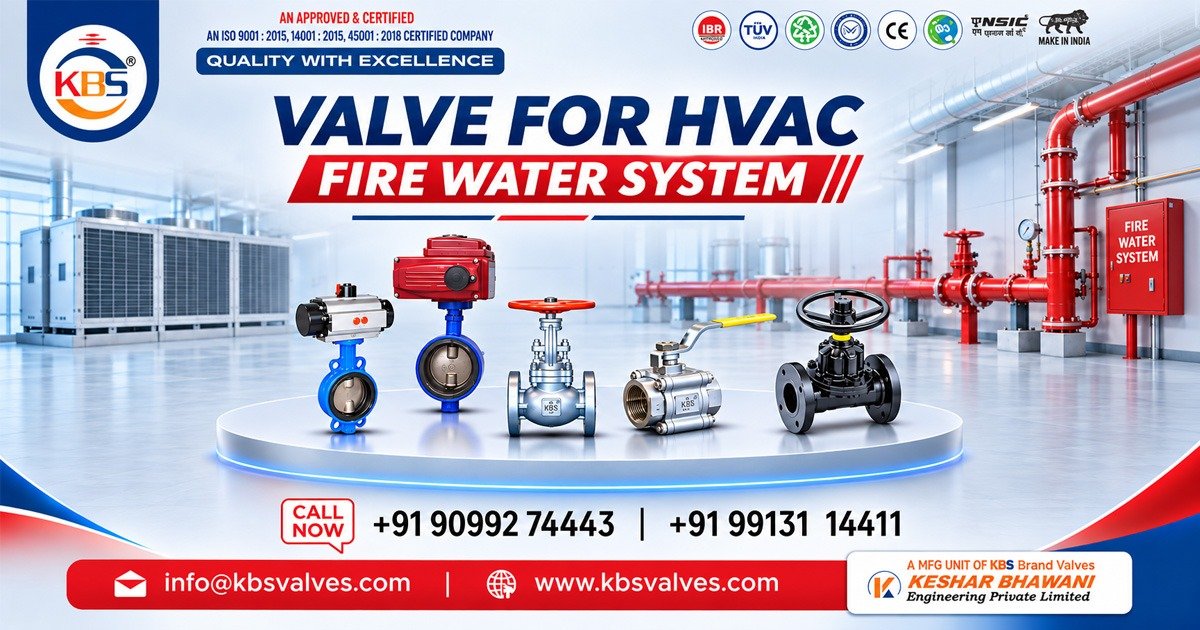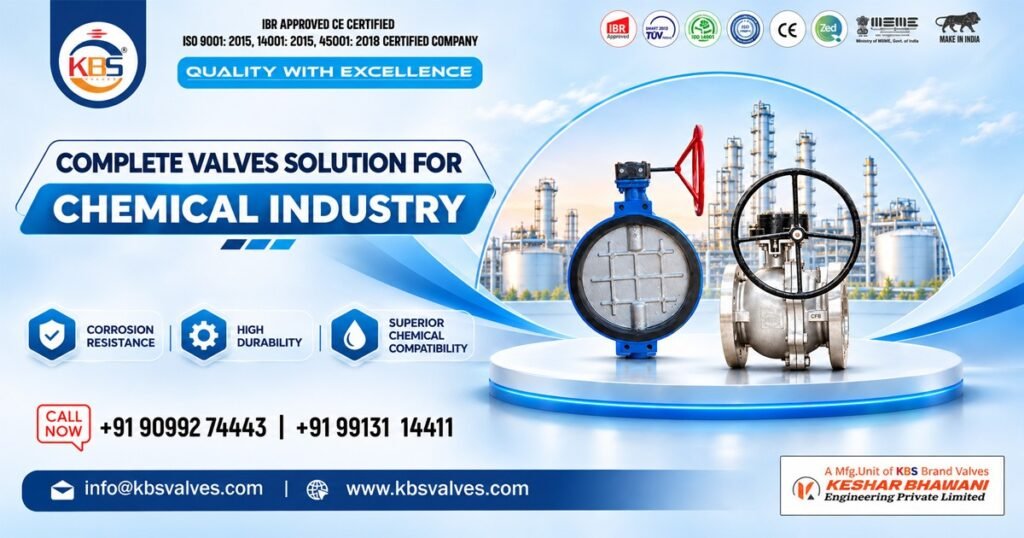
Chemical processing plants require reliable fluid control, precise flow regulation and effective isolation to maintain operational safety and efficiency. Selecting suitable industrial valves for chemical industry applications is essential when handling corrosive chemicals, hazardous liquids, aggressive solvents and high-temperature process media.
Incorrect valve selection can lead to corrosion, leakage, equipment damage, production interruptions and increased maintenance costs. Chemical compatibility, operating pressure, temperature and construction materials are critical factors in determining valve suitability.
KBS Valves – Kesharbhawani Engineering Private Limited, Ahmedabad, Gujarat, offers application-focused valve solutions for chemical industry requirements, supporting chemical manufacturers, plant engineers and industrial customers across Gujarat, Madhya Pradesh and India.
Importance of Industrial Valves in the Chemical Industry
Industrial valves play a critical role in chemical processing operations, including:
- Chemical flow regulation and process isolation
- Leakage prevention and pressure management
- Safe handling of hazardous and corrosive fluids
- Operational safety and process efficiency
- Prevention of reverse flow
Appropriately selected corrosion resistant valves help minimise material degradation and support reliable plant operations.
Types of Valves Used in Chemical Industry
KBS Valves offers a diverse range of industrial valves for different chemical processing applications.
Ball Valves
Provide quick shut-off and low flow resistance. Standard ball valves are primarily suitable for isolation rather than continuous throttling.
Butterfly Valves
Offer compact flow isolation and regulation, particularly in larger pipelines, subject to seat compatibility.
Gate Valves
Provide low flow resistance when fully open and are suitable for pipeline isolation rather than throttling.
Globe Valves
Suitable as flow control valves for chemical industry applications requiring regulated flow, although they create greater pressure loss.
Check Valves
Prevent reverse flow and help protect pumps and process equipment.
Diaphragm Valves
Suitable for corrosive fluid handling, subject to diaphragm material compatibility and operating limits.
PTFE-Lined Valves
These chemical resistant valves help protect metallic valve surfaces from direct exposure to compatible corrosive chemicals.
Safety Valves
Provide overpressure protection for process equipment and pressure vessels when correctly sized and configured.
Jacketed Valves
Help maintain process temperature and fluid consistency when handling viscous or temperature-sensitive media.
Pneumatic and Electrically Actuated Valves
Support automated valve operation, remote control and process automation.
Industrial Valve Comparison Table
| Valve Type | Primary Function | Typical Application |
|---|---|---|
| Ball Valve | Quick isolation | Chemical transfer |
| Butterfly Valve | Flow regulation and isolation | Wastewater treatment |
| Gate Valve | Pipeline isolation | Process pipelines |
| Globe Valve | Flow regulation | Chemical dosing |
| Check Valve | Backflow prevention | Pump discharge |
| Diaphragm Valve | Fluid isolation | Corrosive liquids |
| PTFE-Lined Valve | Corrosion resistance | Acid and alkali handling |
| Safety Valve | Pressure relief | Pressure vessels |
| Jacketed Valve | Temperature maintenance | Viscous chemicals |
| Actuated Valve | Automated operation | Process automation |
Key Challenges in Chemical Processing and Their Valve Solutions
Chemical processing involves corrosion, elevated temperatures, pressure fluctuations, abrasive media and leakage risks.
Selecting compatible valve body materials, linings, seats and seals helps address chemical degradation. Suitable sealing arrangements, erosion-resistant components and correctly rated valves support operational reliability. Accessible valve designs also facilitate inspection and maintenance.
Applications of Industrial Valves in Chemical Processing Plants
Chemical handling valves are widely used in:
- Chemical storage and transfer systems
- Chemical reactors and process pipelines
- Acid, alkali and solvent handling
- Mixing and dosing systems
- Wastewater treatment plants
- Chemical and petrochemical processing
- Steam and industrial utility systems
How to Select the Right Valves for Chemical Processing Plants
When selecting valves for chemical processing plants, consider:
- Chemical composition and concentration
- Operating pressure and temperature
- Valve body, seat, seal and lining materials
- Flow regulation and isolation requirements
- Valve size and end connections
- Manual or automated operation
- Applicable safety and quality standards
- Inspection and maintenance requirements
Final valve selection should be based on specific process conditions, chemical compatibility and engineering requirements.
Why Choose KBS Valves for Chemical Industry Valve Solutions?
KBS Valves is an Ahmedabad-based industrial valve manufacturer and supplier offering a diverse product portfolio, manufacturing expertise, application-focused solutions and a quality-oriented manufacturing approach.
The company supports industrial customers requiring valves for chemical plants in India, including chemical processing facilities across Gujarat and Madhya Pradesh.
Industrial Valve Supplier in Madhya Pradesh
KBS Valves supplies industrial valves for chemical industry applications across Madhya Pradesh, including Indore, Pithampur, Bhopal, Mandideep, Dewas, Ujjain, Nagda, Ratlam, Dhar, Gwalior, Jabalpur, Satna, Rewa, Singrauli, Sagar, Bina, Neemuch, Mandsaur, Katni and other industrial regions.
We offer chemical resistant valves, corrosion resistant valves and flow control valves for chemical industry applications to meet diverse industrial requirements across Madhya Pradesh.
Frequently Asked Questions
1. Which types of valves are used in the chemical industry?
Ball, butterfly, gate, globe, check, diaphragm, PTFE-lined, safety, jacketed and actuated valves are commonly used depending on process requirements.
2. Which valves are suitable for corrosive chemicals?
PTFE-lined valves, diaphragm valves and suitable corrosion-resistant alloy valves may be used depending on chemical compatibility and operating conditions.
3. Why are PTFE-lined valves used in chemical processing?
PTFE linings provide broad chemical resistance and help protect metallic valve surfaces from direct contact with compatible aggressive chemicals.
4. How do I select the right valve for a chemical processing plant?
Consider chemical compatibility, operating pressure, temperature, construction materials, flow requirements and applicable engineering standards.
5. What is the role of safety valves in chemical plants?
Safety valves automatically relieve excess pressure at a predetermined set pressure to help protect process equipment against overpressure.
6. Does KBS Valves supply industrial valves for chemical plants in India?
Yes, KBS Valves manufactures and supplies industrial valves from Ahmedabad, Gujarat, supporting chemical industry requirements across India, including Madhya Pradesh.
Conclusion
Selecting suitable industrial valves for chemical industry applications is essential for safe, reliable and efficient chemical processing. Appropriate valve designs and compatible construction materials help improve process control, manage operational risks and support long-term plant reliability.
Looking for reliable valve solutions for chemical industry applications? Contact KBS Valves for application-specific industrial valves, technical assistance and competitive quotations.
- Website: www.kbsvalves.com
- Email: info@kbsvalves.com
- Phone: +91 90992 74443 | +91 99131 14411
View Product: Click Here