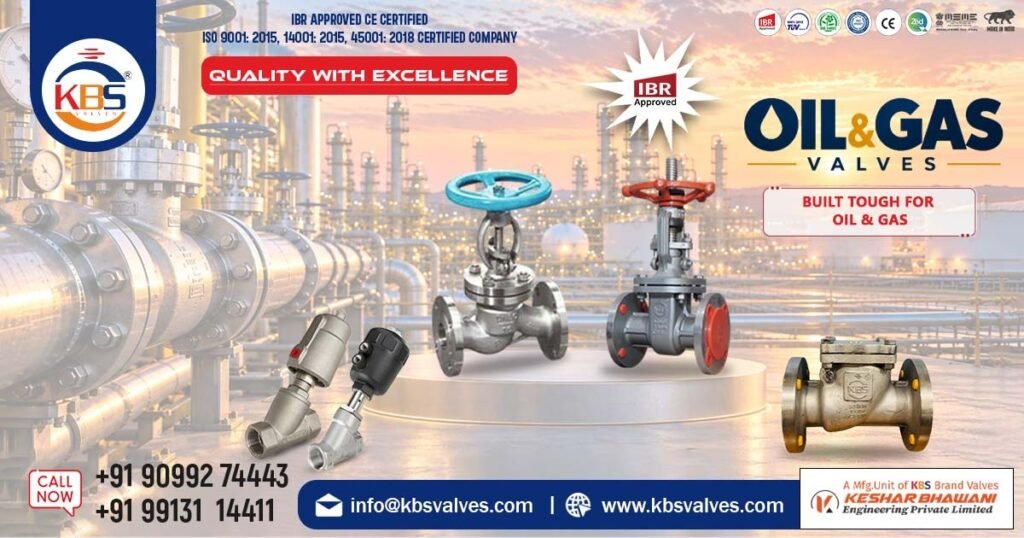
Choosing the right valve for oil and gas applications requires matching its function, materials, pressure and temperature ratings, flow capacity, and sealing performance to the operating conditions.
Start with a detailed service specification, then verify the selected valve against project requirements.
Our KBS Valves guide outlines the key factors to consider when evaluating valves for pipelines, processing plants, refineries, and associated systems.
1. Define the Application and Operating Conditions
Before comparing industrial valves, identify what the valve must handle:
- Process fluid: Crude oil, natural gas, condensate, steam, or other service media.
- Fluid characteristics: Viscosity, corrosiveness, solids content, and potential deposits.
- Operating conditions: Normal and maximum pressures, temperatures, and flow rates.
- Installation environment: Offshore exposure, outdoor conditions, or restricted access.
- Required function: Isolation, flow regulation, backflow prevention, or pressure protection.
A clear application specification helps narrow the selection and prevents unsuitable substitutions.
2. Select the Valve Type for Its Intended Function
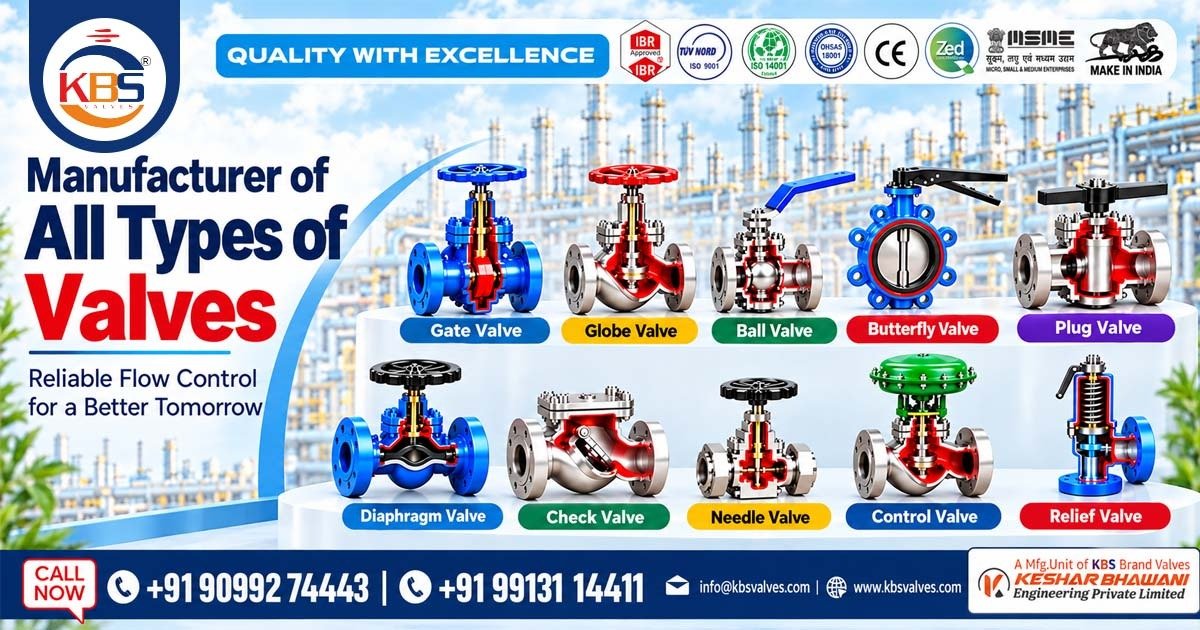
Different valve designs serve different operating needs:
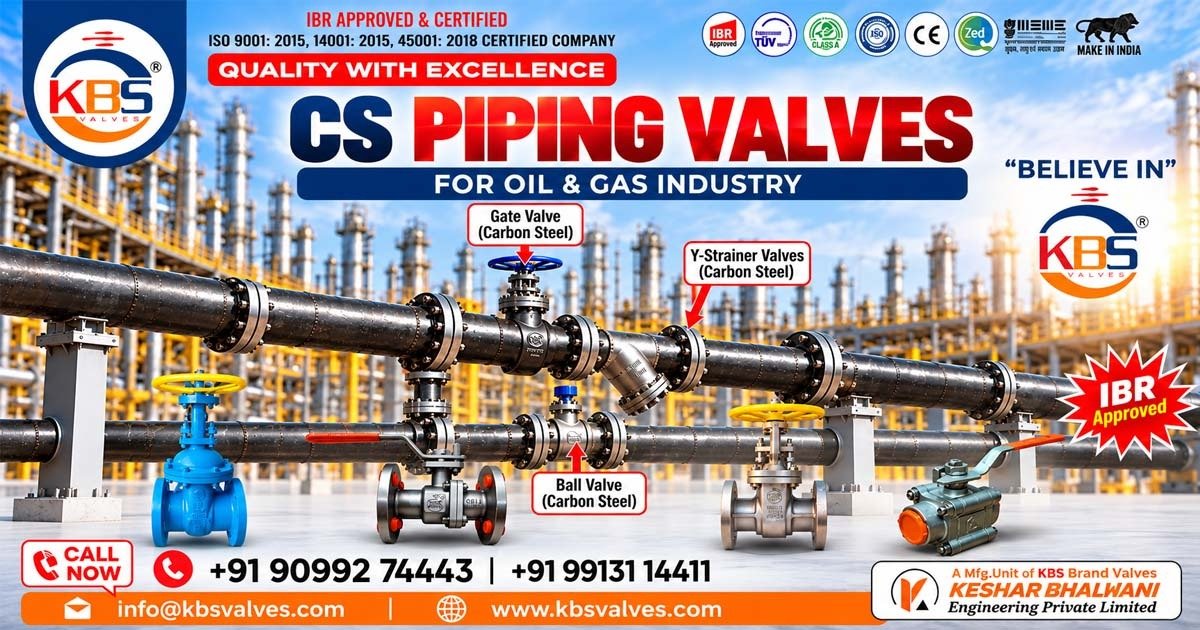
- Ball valves: Commonly selected for on/off isolation and frequent operation.
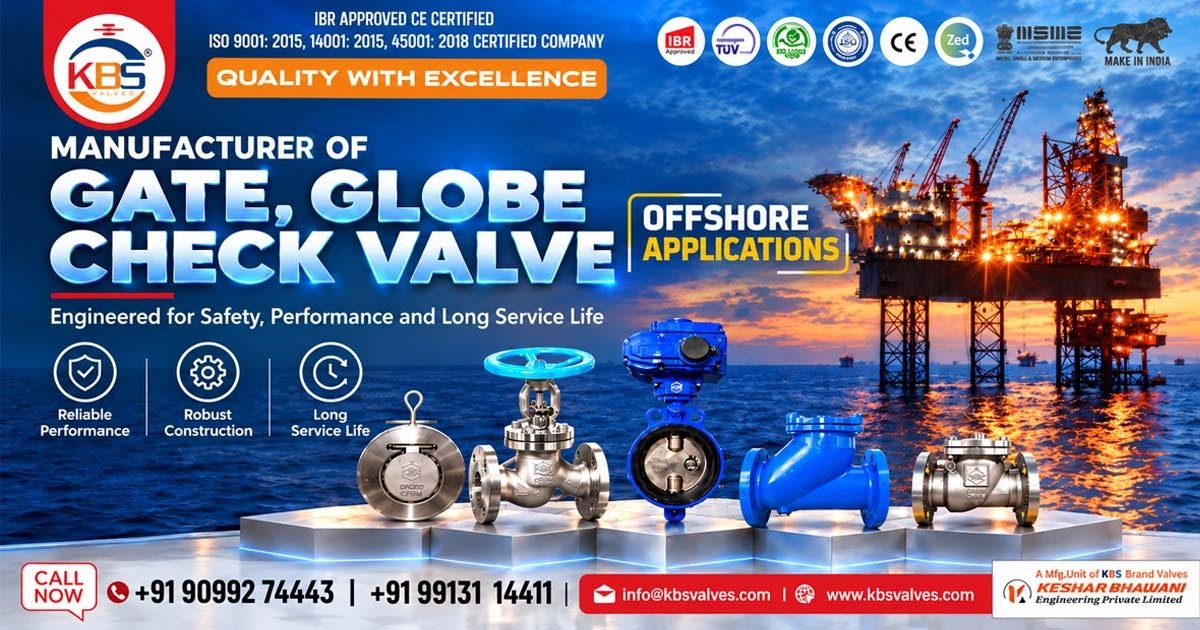
- Gate valves: Suitable for fully open or fully closed service; generally unsuitable for throttling.
- Globe control valves: Used for flow regulation when equipped and sized for the control duty.
- Check valves: Help prevent reverse flow and protect connected equipment.
- Butterfly valves: Offer compact installation for suitable isolation and control applications.
Choose the specific design according to service conditions, required shutoff performance, and operating frequency.
3. Verify Pressure and Temperature Ratings
A valve’s pressure capability depends on its material and operating temperature.
- Check the manufacturer’s pressure–temperature rating.
- Account for startup, shutdown, and credible operating excursions.
- Verify the limits of seats, seals, packing, and other internal components.
- Confirm that the complete valve assembly suits the specified service.
A pressure class is a rating designation, not a fixed pressure limit in psi.
4. Match Materials to the Process Fluid
Material selection affects corrosion resistance, sealing performance, and service life.
- Evaluate body, trim, seat, and seal materials separately.
- Consider corrosion, erosion, abrasion, and chemical compatibility.
- Assess low-temperature toughness or high-temperature performance where relevant.
- Specify suitable material requirements for hydrogen sulphide-containing sour service.
Avoid assuming that stainless steel or any single alloy is suitable for every oil and gas application.
5. Size the Valve for Actual Flow Requirements
Pipe diameter alone does not determine the correct control valve size.
- Provide minimum, normal, and maximum flow rates.
- Define inlet pressure, outlet pressure, and allowable pressure drop.
- Calculate the required flow coefficient, Cv or Kv.
- Evaluate cavitation, flashing, noise, and choked flow where applicable.
Accurate sizing helps the valve operate effectively across the required process range.
6. Check Sealing and Actuation Requirements
Specify how the valve must seal and operate before finalising the selection.
- Seat leakage: Define the required shutoff acceptance criteria.
- External leakage: Review packing and fugitive-emission requirements.
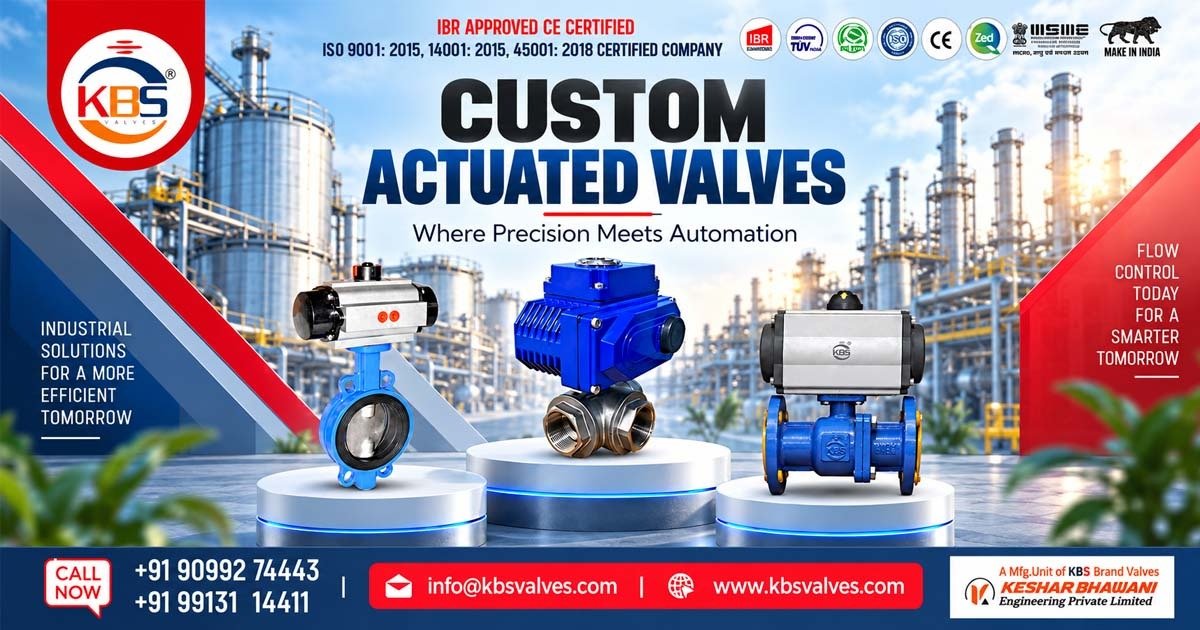
- Actuation: Select manual, pneumatic, electric, or hydraulic operation.
- Failure response: Specify the required position following loss of power or control supply.
- Operating duty: Consider cycling frequency, actuator sizing, and closure time.
For critical service, assess the valve and actuator together as a complete assembly.
7. Evaluate Maintenance and Lifetime Cost
The purchase price is only one part of valve ownership.
- Check access for inspection, servicing, and replacement.
- Confirm availability of compatible spares.
- Consider maintenance intervals and expected operating cycles.
- Assess installation, actuation, and potential downtime costs.
A suitable valve should meet the operating duty while supporting practical long-term maintenance.
Preparing Your Valve Enquiry for KBS Valves
For a focused enquiry, share:
- Application and process fluid.
- Valve function, size, and end connections.
- Design pressure and temperature.
- Flow rates and allowable pressure drop.
- Material, sealing, and actuation requirements.
- Applicable standards, testing, and documentation needs.
Frequently Asked Questions
1. Which valve is best for oil and gas applications?
There is no universal choice. Select the valve according to its function, fluid, pressure, temperature, and sealing requirements.
2. Are ball valves suitable for natural gas?
Yes, appropriately specified ball valves are commonly used for natural gas isolation.
3. Can gate valves control flow?
Gate valves generally suit fully open or fully closed service. Use a suitable control valve for regular throttling.
4. How do I choose valve materials?
Match all wetted materials and seals to fluid chemistry, temperature, corrosion risks, and applicable service requirements.
5. Does every oil and gas valve need API 6D compliance?
No. Applicable standards depend on the valve type, service, installation, and project specification.
6. What information should I send to KBS Valves?
Provide the fluid, valve function, size, pressure, temperature, flow conditions, materials, connections, and required standards.
We Supply Oil & Gas Valves in India including locations Andhra Pradesh, Arunachal Pradesh, Assam, Bihar, Chandigarh, Chhattisgarh, Dadra and Nagar Haveli and Daman and Diu, Delhi, Goa, Gujarat, Haryana, Himachal Pradesh, Jammu and Kashmir, Jharkhand, Karnataka, Kerala, Ladakh, Madhya Pradesh, Maharashtra, Manipur, Meghalaya, Nagaland, Odisha, Puducherry, Punjab, Rajasthan, Sikkim, Tamil Nadu, Telangana, Tripura, Uttar Pradesh, Uttarakhand, West Bengal.
Bring your operating challenges to KBS Valves; start a focused conversation about your next valve requirement today.
Website: www.kbsvalves.com
Email: info@kbsvalves.com
Phone: +91 90992 74443 | +91 99131 14411
View Product: Click here